Key Takeaways
- A freelance contract protects both you and the client. It is not only for big projects.
- Every contract needs six things at minimum: scope, price, payment dates, deadlines, revisions, and ownership of the work.
- Vague wording causes most freelance disputes, so write down what is included and what is not.
- Ask for a deposit before you start, especially with new clients.
- Add a clear kill fee or termination clause so you get paid for work already done.
- Contract rules differ by country and state, so have a local professional review your template before you rely on it.
A freelance contract is a written agreement that spells out what you will deliver, what the client will pay, and what happens if plans change. Many beginners skip it because it feels formal or awkward. Then a client disappears, keeps asking for “one more small change,” or pays three weeks late, and there is nothing on paper to point to. This guide shows you what to include, how to bring it up with a client, and the mistakes to avoid. It is general information, not legal advice.
Why a Freelance Contract Matters Even for Small Jobs
A $50 gig and a $5,000 project can go wrong in the same ways. The client expects more than you planned. The deadline slips because feedback arrives late. Payment sits in limbo. A written agreement turns those arguments into a quick look at what both sides already agreed.
It also makes you look professional. Clients who are serious about the work tend to respond well to a clear, short agreement. If someone pushes back hard on putting basic terms in writing, that tells you something about how the project may go.
If you are still finding your first clients, start with our guide on how to start freelancing, find clients and get paid, then come back here before you send your first proposal.
What to Include in a Freelance Contract
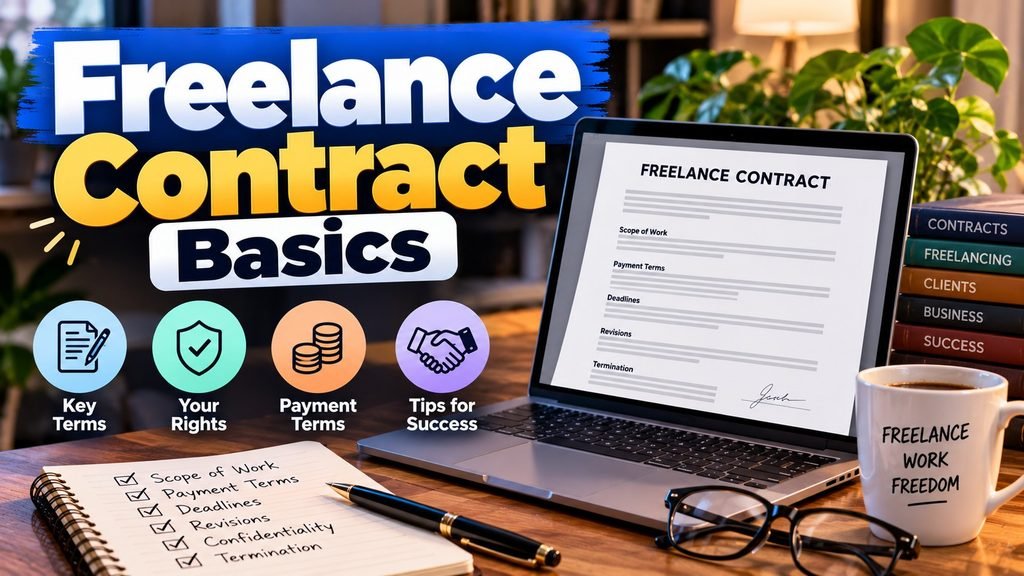
You do not need pages of legal language. You need clear answers to a handful of questions. Here is a simple checklist.
| Clause | What it answers | Example wording idea |
|---|---|---|
| Scope of work | What exactly will you deliver? | Four blog posts of about 1,000 words each, with one round of edits |
| Price and payment | How much, and when? | 50% deposit upfront, 50% on delivery |
| Timeline | When is each part due? | First draft within seven days of receiving the brief |
| Revisions | How many changes are included? | Two rounds included, extra rounds billed hourly |
| Ownership | Who owns the finished work? | Rights transfer to the client after full payment |
| Termination | What if someone cancels? | Work completed so far is paid for, plus a cancellation fee |
| Late payment | What if the invoice is overdue? | Payment due within a set number of days, with a late fee if you choose to charge one |
Scope of Work in Your Freelance Contract
Scope is where most problems start. Be specific about deliverables, formats, and quantities. Then add a line about what is not included. If you are writing posts, say whether research, images, and uploading to the client’s site are part of the price. Anything not listed is a new request and a new quote.
Payment Terms and Deposits
State the total price, the currency, the payment method, and the due date. For new clients, ask for a deposit before you begin. A common split is part upfront and the rest on delivery, but pick what feels fair for the size of the job. If you are unsure how to set your rates, read our post on what freelance writers make in 2026 for a reality check.
Revisions and Approval
Say how many revision rounds are included and how long the client has to send feedback. Without this, a small project can drag on for months. A simple rule works well: if feedback has not arrived within a set number of days, the project pauses and your schedule may move.
Ownership and Portfolio Rights
Decide when ownership passes to the client. Many freelancers transfer rights only after final payment. If you want to show the work in your portfolio, add a line that allows it. If the client needs confidentiality, you can agree to that instead.
How to Bring Up a Freelance Contract With a Client
Keep it casual and routine. You might say, “Before I start, I send a short agreement so we are both clear on the details. I will send it over today.” Most clients accept this without a second thought.
- Send the agreement right after the client says yes to your proposal.
- Keep the language plain. Short sentences beat dense legal text.
- Use an e-signature tool or a signed email reply so you have a record.
- Do not start work until the agreement and any deposit are in place.
- Save a copy of everything in one folder.
Using Platform Terms Versus Your Own Contract
If you work through a marketplace, the platform has its own terms for payment and disputes. Those terms can change, so read the current version on the platform’s official help pages. For direct clients, you are on your own, which makes a written agreement even more important. Our work from home jobs guide covers where remote clients tend to come from.
Where do templates come from? Many freelancers start from a free template and adjust it. Whatever you pick, read every line, remove what does not apply, and have a lawyer or a local small business advisor check it if the project is large. Laws on things like ownership and late fees vary by location.
Common Mistakes to Avoid
- Relying on a chat message or “sounds good” as the agreement.
- Leaving the scope open ended, such as “unlimited edits.”
- Starting work before the deposit arrives.
- Copying a template that was written for another country without checking it.
- Forgetting to say what happens if the client cancels midway.
Frequently Asked Questions
Do I need a freelance contract for every client?
It is a good habit. Even a one page agreement for a small job gives you something to refer back to if the client changes their mind.
Is an email agreement enough?
Often it is better than nothing, especially if both sides clearly confirm the terms in writing. For larger projects, a signed document is safer. Check the rules where you live.
How much should I ask for as a deposit?
There is no single rule. Many freelancers ask for a portion upfront for new clients. Choose an amount that covers your time if the client disappears.
Can I use a free template?
Yes, as a starting point. Edit it to match your service and country, and consider a professional review for high value projects.
What if a client will not sign?
Ask what concerns them and offer to adjust reasonable terms. If they refuse any written terms at all, think carefully before taking the job.
Conclusion
A good freelance contract is short, clear, and written before the work starts. Take an hour this week to draft your own template using the checklist above, then reuse it for every new project. If you want more practical guides on freelancing and earning online, browse the rest of ideatopost.com and build your next client relationship on solid ground.